






|

|

Health officials in Austin are considering opening a makeshift hospital as its intensive care units fill up. Patients in North Texas are being treated in lobbies or in hallways. And hospitals around Laredo, Abilene, and College Station have three or fewer intensive care unit beds open, according to state data.
A week into the new year, hospitalizations in Texas have well-surpassed a deadly summer wave that overwhelmed health care workers in the Rio Grande Valley. Health experts have long warned of a dark winter — with a public tired of following safety precautions, a raging pandemic, and cold weather drawing people indoors where the virus can more easily spread. Add to that holiday gathering and increased levels of travel, which health officials say are already being reflected in the growing numbers of hospitalized coronavirus patients.
The dire figures come as two vaccines, produced in record time, have rolled out to health care workers in a massive undertaking so far beset by confusion and mishaps. The state has reported at least 28,545 fatalities tied to the virus, available intensive care unit beds are at a low and health experts say Texans can’t vaccinate their way out of the current surge. On Thursday, the first known case of a new and more contagious coronavirus strain was reported in Texas.

“Right now, probably half the patients I see never make it out of the waiting room… just because there’s physically no space, and when we do have space it’s limited — nurse staffing also is an issue,” said Dr. Robert Hancock, who works at hospitals in North Texas, Amarillo, and Oklahoma. “We’re doing the best we can, but it’s to a point where we’re not providing the care we’d like to.”
In Central Texas, Austin-area health officials forecast the region might run out of intensive care unit beds in the coming days and could start to set up a pop-up hospital as soon as this week. They erected a health facility in the Austin Convention Center as infections soared this summer, and a solicitation obtained by The Texas Tribune in June showed health officials were recruiting volunteers to “provide hands-on care to COVID + patients.” It never took in patients.
Now, “the state is in the surge. The state is in crisis,” said Dr. Mark Escott, interim health authority for Austin and Travis County. “It seems very clear to us that we are going to run out of hospital beds, and that we are going to have to stretch resources in order to meet the needs of our community,” he added.
Some hospitals in North Texas are holding patients in emergency rooms that are not designed for long-term care because there’s no space in the intensive care units, said Hancock, who is president of the Texas College of Emergency Physicians. It’s nearly impossible to transfer a patient that needs more advanced or specialized care elsewhere — for those patients: “you’re out of luck. There’s nobody that’s going to accept you,” he said.
The hospitals are so crowded he is sometimes treating patients in the lobby and then discharging them because there are no available beds.
Around Fort Worth, some hospitals are running out of both intensive care unit beds and regular beds, said Dr. Justin Fairless, an emergency room doctor and an assistant professor of emergency medicine at a medical school in Fort Worth established by Texas Christian University and the University of North Texas Health Science Center.
At the two hospitals where he works, there are coronavirus patients in the hallway “because there’s nowhere else to put them,” and nursing staff who typically do administrative work are helping see patients, he said. Some health care workers who have the virus have returned to work because there’s not enough staff, he said. They are approved to do so under the Centers for Disease Control and Prevention guidance that permits it after symptoms have improved and a certain number of days have elapsed.
During Fairless’ shift Tuesday, patients were being treated in pockets of the hospital not normally used for patient care, like a pre-operation area used by health care workers performing an endoscopy. He sent several patients home that ordinarily would have been admitted to the hospital because of the possible risk that they’d be exposed to the coronavirus.
“We’re admitting patients into areas that don’t typically hold patients and on top of that,” he said, adding that some are being held in the emergency room for up to 48 hours because they “have nowhere else to go.”
The president of the Dallas-Fort Worth Hospital Council said hospitals in the area “have capacity issues, staffing issues and are anticipating another COVID-19 surge in late January.” Elsewhere, in Lubbock, hospitals are full, but the numbers have lessened since the area saw a crush of patients this fall.
Statewide, more than a dozen regions called Trauma Service Areas have surpassed a “high hospitalizations” marker that Gov. Greg Abbott set out, and that requires businesses there to scale back capacity to let fewer patrons in. Under Abbott’s order, the business limitations kick in in regions where hospitals are more than 15% full with coronavirus patients for seven-days. The number of people allowed into businesses is reduced from 75% occupancy to 50%, and open bars must close — though many have begun to sell more food to qualify as restaurants.
A Tribune analysis found those remedies set out by Abbott have done little to quash the virus in areas already seeing hospitals fill up.
In Harris County, which had to ratchet back business capacity under Abbott’s order earlier this week, Judge Lina Hidalgo said she was concerned the “threshold has not yielded the necessary change in other areas.”
“Reaching the threshold — activating the rollbacks — doesn’t in and of itself change the trajectory. That’s something that’s in all of our hands,” Hidalgo said.
In the Austin and Travis County area, where there’s been a 160% increase in new hospital admissions since December, Escott said he doesn’t think that “rollback to 50% occupancy at retail and restaurants is doing the trick.”
“I think it was forward-thinking to set those benchmarks, but I think we have to assess the situation and identify whether or not the strategy is working or not — it’s clearly not working,” he said.
Local officials there, he added, have “reached the limits of what we can do under state law, and under the executive orders.”
Abbott’s mandates have barred local officials from taking more aggressive actions, and over the holidays he took aim at an Austin-area curfew that tried to ban late-night dine-in and beverage service for a few days to lessen the virus’ spread.
A spokesperson for Abbott said local officials have “abdicated their authority and refused to enforce existing protocols” by leaving violations unpunished, “further endangering the health and well-being of Texans.”
“Increased restrictions will do nothing to mitigate COVID-19 and protect communities without enforcement,” said spokesperson Renae Eze. “And even states with increased restrictions and lockdowns throughout the pandemic have done little to mitigate the virus, such as California and Rhode Island, which have the highest COVID-19 infection rates per capita in the world, and New York, which is leading the nation in COVID-19 deaths.”
In the meantime, hospitals in parts of the state are full of patients, and vaccine doses are being gradually doled out to health care workers and other vulnerable groups.
Fairless, the emergency room doctor, said the hospital was becoming a more and more “unsafe environment” and was excited to get a second dose of a Pfizer vaccine Wednesday. Driving to the hospital, he said: “I can guarantee I’m going to see the parking lot totally full of people.”
“I’ve gone through H1N1 and all the other flu pandemics,” he added. “I’ve never really seen it this busy — especially at these smaller hospitals.”





https://twitter.com/i/status/1347334804052844550
President Donald Trump is now promising an “orderly transition” of power, tweeting through a surrogate early Thursday minutes after Congress formally confirmed the election of Joe Biden as president following an hourslong takeover of the Capitol by a mob of Trump supporters.
A statement from the president on Twitter via deputy chief of staff for communications Dan Scavino repeated baseless claims of widespread voter fraud but included the reversal.
“Even though I totally disagree with the outcome of the election, and the facts bear me out, nevertheless there will be an orderly transition on January 20th. I have always said we would continue our fight to ensure that only legal votes were counted. While this represents the end of the greatest first term in presidential history, it’s only the beginning of our fight to Make America Great Again!”
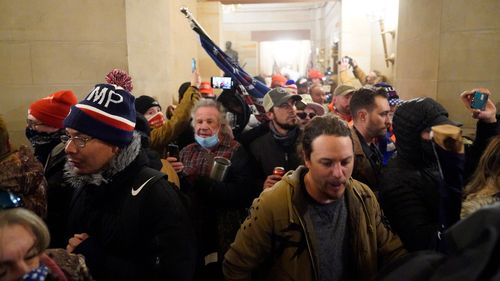
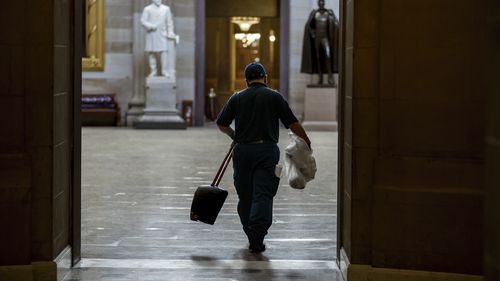
The statement followed dramatic scenes on Capitol Hill on Wednesday, with pro-Trump supporters storming the building, forcing a lockdown and lawmakers to seek shelter.
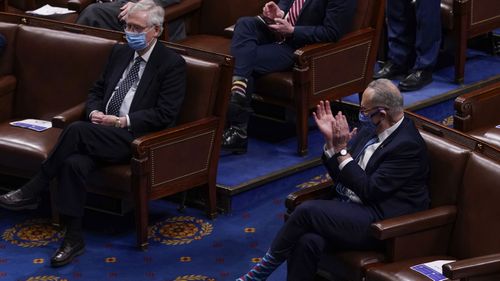
Late Wednesday, Congress reconvened and formally confirmed the election of Biden after 3:30 a.m. ET. The affirmation came after the House and Senate voted overwhelmingly to reject efforts by some Republicans to object to the acceptance of Electoral College wins for Biden in Arizona and Pennsylvania.
Biden and Vice President-elect Kamala Harris hit 306 votes in the Electoral College, 36 more than needed to secure a White House victory. Trump received 232 votes.
Trump repeatedly refused to concede the election to Biden, making numerous unfounded allegations of voter fraud without producing evidence.
Scenes of angry pro-Trump protesters gathered on the steps of the Capitol before pouring into the building and sweeping through the halls of Congress, sitting at lawmakers’ desks and posing for photos, draped in pro-Trump flags and merchandise, have shocked the world.
Biden condemned the storming of the Capitol, saying he was “shocked and saddened” by what he described as an insurrection.
“This is not dissent. It’s a disorder. It’s chaos. It borders on sedition and it must end now,” the Democratic president-elect said in an address Wednesday, as he called on Trump to tell his supporters to go home.
Trump later tweeted a video in which he told supporters “you have to go home now” but again repeated false claims the election was stolen, leading to his Twitter account being temporarily frozen.

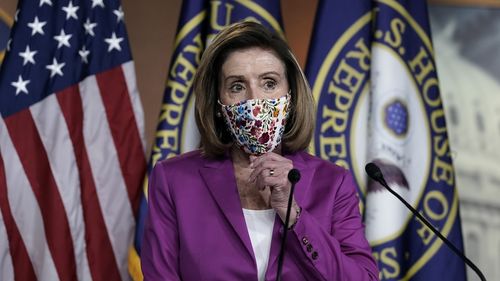
Congresswoman Sheila Jackson Lee, a senior member of the House Committees on Judiciary, Homeland Security, and the Budget introduces articles of impeachment against President Donald Trump.

“Our Constitution was written as a guide for governing our democracy and to protect it from authoritarian and tyrannical control. It also serves as a tool to protect our nation from both foreign and domestic enemies who intend to do harm to our Republic. At this moment in our history, our Constitutional forefathers are crying out for us to use the tools provided in this ageless document. Yesterday, we saw domestic enemies incite violence and invade the people’s houses with the intent to harm. Enough is enough! The President has completely lost whatever moral authority he had and is unfit as Commander in Chief. His actions to incite violence against his own government and against the entire Congress warrants removal from office. And if Administration officials refuse to invoke the 25th Amendment, I am moving forward with Articles of Impeachment to remove him from office for the following reasons:”
“Donald John Trump has actively and continuously endeavored to undermine the essential institutions and foundations of a democratic system of government in the United States, engaging in a long train of abuses and usurpations, pursuing invariably the same object, evincing a design to make himself an authoritarian ruler unaccountable to, and independent of, the people of the United States by:
“As the resolution points out and makes clear, a person ‘whose character is thus marked by every act which may define a tyrant, is unfit to be the ruler of a free people,’ and warrants impeachment and removal as President of the United States.”
The resolution can be found here.
|
|
|

As COVID-19 case numbers continue to climb, the Houston region is on the verge of reaching a new critical point.
“Right now, the 14-day average is off the charts at 1,700 new cases on average reported every single day,” Harris County Judge Lina Hidalgo said.
Governor Greg Abbott’s executive order states that if Trauma Service Area Q – which includes Harris, Fort Bend, Montgomery, Austin, Colorado, Matagorda, Walker, Waller and Wharton Counties – has seven consecutive days of COVID-19 hospitalizations above 15% of total hospital capacity, certain indoor businesses will have to go back to 50% occupancy and elective surgeries will have to stop. Bars will also have to close.
“We are getting perilously close to that,” Houston Health Authority Dr. David Persse said.
On Monday, the region reported its sixth straight day with COVID-19 hospitalizations over 15%, coming in at 18.21%. The state reports the previous day’s numbers, so that percentage was for Sunday.
“Things are getting worse,” Hidalgo said. “Things are not improving, and this may just be the tip of the iceberg.”
Other trauma service areas around the Houston area have already rolled back re-openings. The region that includes Brazoria, Chambers, and Galveston Counties had to roll back, as did the region that includes Liberty, Grimes, and Brazos counties.
The rollbacks are part of Abbott’s Executive Order GA-32, which was signed back in October to expand business openings. Indoor businesses can go back to 75% capacity and elective surgeries can resume when the number drops below 15% for seven consecutive days.
“Obviously I welcome the governor’s threshold, but I’m concerned it’s not enough and likely a little too late,” Hidalgo said.
A spokeswoman for Abbott says shutting down bars and a slight reduction in capacity at restaurants worked in places like El Paso and Midland-Odessa. If Houston’s rollback is triggered, they’re confident it can work again.
A region must then stay below 15% COVID hospitalizations for seven straight days for bars to reopen and restrictions to be lifted. Officials expect hospitalizations to keep climbing and if that happens, deaths will spike, too.
“In July, 1,200 people died in that single month. This (month) could very well be worse than that,” Hidalgo said.

As COVID-19 cases and hospitalizations continue to reach “dire” levels across the state, Texas Health Resources announced it will postpone all outpatient elective and non-essential surgeries and procedures.
“Our inventory of PPE and ventilators is strong. We’re mainly concerned about our supply of healthcare workers and the many months of stressful work they’ve endured in the care of these patients,” spokesperson Amanda Huffman said.
The pause at its “14 wholly-owned hospitals” is because the group is dealing with such a high number of COVID-19 patients. The disease is causing “a severe stress on inpatient and emergency department bed capacity and staffing resources,” according to the spokesperson.
“This, along with record numbers of COVID-19 positive cases in our communities, demands that our hospitals initiate their surge plans to accommodate the increased volume,” the spokesperson said.
The decision is in accordance with an order Gov. Greg Abbott issued in September. The order requires hospital groups to postpone such procedures in areas with high hospitalizations if those procedures would “deplete any hospital capacity needed to cope with the COVID-19 disaster.”
The group says patients should contact their doctors with any questions.
Texas Health has 27 hospitals, more than 80 outpatient facilities, and more than 250 other community clinics and doctors’ offices. Within those, the group operates around 3,400 available beds.
A spokesperson with Texas Health said this decision does not apply to all their 27 hospital locations and numerous outpatient centers because they do not necessarily keep patients overnight and are not treating COVID-19 patients.
Texas Health said these facilities perform procedures that do not impact their capacity to care for COVID-19 patients.
The news comes as the state reported its highest 7-day case average and the largest number of hospitalizations since the pandemic began on Monday.
And experts believe a post-Christmas surge has not yet begun to be realized, which, when it arrives, will further tax the “already fatigued and courageous clinical staff in our hospitals.”
“COVID-19 has filled our hospitals with very sick and dying people, and we have taken this step to help deal with this high volume of critically ill patients,” Huffman said.
Several Texas Health hospitals that have been unusually busy with COVID-19 patients have already been postponing some procedures, the spokesperson said.
“The models reflect a significant surge on top of our current surge in the next few weeks,” said Stephen Love, the president of the Dallas-Fort Worth Hospital Council.
Typically, people are hospitalized a week or two after testing positive for the virus.
State officials reported a combined 17,939 new cases Monday, along with 52 additional deaths.
There are also an estimated 12,961 people currently hospitalized across the state, the highest number since the pandemic began.
Those numbers have continued to climb dramatically since the end of December, going from about 10,868 in hospitals on Christmas to those nearly 13,000 patients by Jan. 4.
Across the North Texas region, there were 3,982 COVID-19 patients hospitalized Monday, according to Love.
That was an “overwhelming 259-patient increase” from just the day before, he said.
And as the number of hospitalizations has risen each day, the number of available ICU beds has dropped.
“Our hospital bed capacity is being challenged, our workforce stretched to the ultimate and the expected surge forthcoming as a result of the recent holidays will only make the situation even direr,” Love explained.
From Sunday to Monday, an additional 81 ICU beds filled up across Texas, state data shows, leaving around 625 such beds available for the roughly 29 million people who live in Texas.
For those in the North Texas region, there are currently around 50 ICU beds available, according to Love.
While Dallas County has the most at 21 available ICU beds, Collin County has just two beds and Ellis County is at three. Tarrant and Denton’s counties have nine and 10 open ICU beds, respectively.
COVID-19 patients represent a little more than half of all patients currently in North Texas ICUs, Love explained. And overall, COVID-19 patients make up a little more than a quarter of total hospital capacity in the region.
“We are entering an extremely serious and critical timeframe regarding COVID-19 treatment in North Texas,” he said.
Houston’s premier Hispanic news network, dedicated to keeping you informed with the latest updates on local and national breaking news, community events, entertainment, chisme, and much more. We strive to be your trusted source for engaging and timely content that connects with our vibrant community and celebrates the culture and stories that matter most to you.
Contact us: contact@queondamagazine.com
© Copyright - Que Onda Magazine 2024


