







The consumer movement marks 15th March with World Consumer Rights Day every year, as a means of raising global awareness about consumer rights and needs.


The consumer movement marks 15th March with World Consumer Rights Day every year, as a means of raising global awareness about consumer rights and needs.

 El Mundial de Futbol de 2026 que se disputará en Norteamérica se expandió más.
Este martes 14 la FIFA incrementó la magnitud del torneo de 2026 por segunda vez — seis años después del primer cambio — al aprobar una etapa de grupos más amplia en el que será el primer Mundial con 48 selecciones.
Al preservar los grupos de cuatro equipos en vez de reducir a tres, el ente rector del fútbol concibió un calendario de 104 partidos en seis semanas durante los meses de junio y julio en Estados Unidos, Canadá y México.
Las 16 ciudades sede — 11 en Estados Unidos, tres en México y dos en Canadá — tendrán ahora 24 partidos adicionales que albergar sobre los 80 que ya habían sido previstos.
Con 1.5 millones de entradas adicionales, la FIFA podrá facturar más para sus arcas por lo menos 11 mil millones de dólares hasta 2026 en un torneo que se disputará mayormente en los gigantescos estadios de la NFL.
La FIFA señaló que la decisión respondió a un análisis completo que tomó en consideración la integridad del torneo, el bienestar de los jugadores, los traslados de los equipos, el atractivo comercial y deportivo.
Añadió que el nuevo formato “mitiga el riesgo de colusión (entre equipos en la última fecha de la fase de grupos) y garantiza que todos los equipos jueguen un mínimo de tres partidos, al mismo tiempo que brinda un tiempo de descanso equilibrado entre los equipos participantes”.
El empeño del presidente de la FIFA Gianni Infantino por disputar más partidos y ampliar los torneos en un calendario congestionado seguramente acentuará el recelo de las ligas domésticas y los jugadores, representados por el sindicato FIFPRO. Llevan quejándose que la FIFA les mantiene al margen de las consultas sobre el futuro del torneo internacional.
El Mundial de seis semanas se disputará un año después que la FIFA ponga en marcha el primer Mundial de Clubes con 32 equipos, el cual se realizaría en Norteamérica para poner a prueba la logística del torneo. La Liga de Campeones también estrenará un nuevo formato con más equipos y partidos desde la temporada 2024-2025.
Desde Francia 1998 los mundiales se disputaron con 32 equipos, con ocho grupos de cuatro. Los finalistas acababan con un total de siete partidos cada uno, pero los que alcancen el duelo por el título sumarán ocho duelos en total.
En el Mundial de Qatar del año pasado, ganado por Argentina, se escenificaron 64 partidos en 29 días.
Apenas 24 equipos participaron la última vez que México (1986) y Estados Unidos (1994) organizaron un Mundial. Canadá será sede por primera vez.

An apparent case of mistaken identity led to the deaths of two Americans and a local bystander in a Mexican border town earlier this month, reigniting an intense debate over what the United States can do to stem drug cartel violence that’s plagued its southern neighbor and also caused immense suffering north of the border.
The Gulf cartel, which effectively controls the border city of Matamoros, where the attack took place, appears to have taken the rare step of apologizing and turned over to local authorities five of its members it claims are responsible.
The deaths of Americans drew excess attention to this recent incident in the U.S., but the reality is that cartel-related violence has been a constant threat to local citizens across several regions of Mexico for years. The country has seen an estimated 360,000 homicides since 2006, when the Mexican government declared a war on drugs. As of 2018, drug cartels controlled as much as 20 percent of Mexican territory, according to a report citing a classified government analysis. The U.S. State Department currently has a Do Not Travel advisory, the strongest possible warning it issues, placed on six states in Mexico due to the threat of kidnappings and killings.
While Americans are occasionally the victims of cartel violence in Mexico and on U.S. soil, the greatest harm cartels inflict in America is the result of the drug trade itself. Mexican cartels are believed to be the primary suppliers of fentanyl to America. The incredibly potent synthetic opioid that was responsible for two-thirds of the record 107,000 U.S. overdose deaths in 2021.
Why there’s debate
Several Republicans have responded to the recent killings by calling for the U.S. to use military force against Mexican drug cartels. While that is extremely unlikely, it’s consistent with a popular view among conservatives that America needs to be much more aggressive in directly combatting the cartels, rather than relying on Mexico’s government to lead the effort. A popular proposal on the right is for the U.S. to designate the cartels as terrorist organizations, a step that could theoretically give America more authority to counteract the group’s activities both in Mexico and at home.
Others say the Biden administration needs to be more forceful when dealing with Mexican leadership, including current President Andrés Manuel López Obrador, who has championed a “hugs, not bullets” approach to cartels and recently claimed Mexico is not a source of fentanyl or a dangerous place to travel.
Critics of these ideas say that military intervention or an anti-terror approach are not only legally untenable, but would also create even more violence without meaningfully disrupting cartel activities. They argue that improving the relationships between U.S. and Mexican authorities, which are said to have unraveled in recent years, is the only way to build a coordinated response to the drug trade.
Many also say that the U.S. should focus on what it can control within its own borders, rather than trying to fix another country’s untenable problems. They argue that the best ways to weaken the cartels is to decrease American demand for the drugs that fund their operations, reduce the number of guns that make their way from the U.S. to Mexico and create an orderly immigration system that leaves less room for smuggling and human trafficking.
Perspectives
The U.S. can thwart the cartels by tackling problems at home that empower them
“The United States needs to resist the reflex to do things ‘over there’ to address threats to U.S. interests and focus instead on being a better neighbor. … Limiting the arms industry, by among other things restoring the assault weapons ban, is a critical starting point. So too is pouring greater resources into drug prevention and treatment to reduce the harm inflicted and profit extracted by fentanyl and other illicit drugs trafficked by drug cartels.” — Dan Restrepo, Dallas Morning News
Americans must stop acting as if the suffering of Mexican citizens doesn’t affect them
“This kidnapping is more than alarming. It’s a wake-up call to stop ignoring the horrific violence raging south of the border and dismissing it as Mexico’s problem. … It’s time to stop polarizing the border and the drug trafficking just to score political points and get serious about pooling resources to combat these problems. Our lives depend on it.” — Elvia Díaz, Arizona Republic
The two counties need to be allies, not adversaries, to curb the drug trade
“Mexico and the U.S. need to be partners. Reducing the violence will take cooperation in addressing root causes, and that includes who has access to weapons.” — Regina Lankenau, Houston Chronicle
The U.S. should stop treating Mexico’s leaders with kid gloves
“The Republican bluster about military action against the cartels is misguided, but it should also be clear that Mexico as a whole is not going to be a real ally to the U.S. in this crisis, as López Obrador has shown. Mexico is our largest trading partner and a regular recipient of U.S. aid. Perhaps those are the first things we should now be re-evaluating.” — Zachary Faria, Washington Examiner
A new approach is needed to respond to the emergence of fentanyl
“I have long been a critic of the War on Drugs, which has failed to stop the drug trade while creating a huge black market for ultraviolent cartels. … But the rise of synthetics and the sheer level of overdose deaths have rattled my thinking. … When cartels mainly moved cocaine and cannabis there was an argument, at least, that they were providing Americans with products they demanded. But with the perilous fentanyl, which some people take unwittingly, there is validity to the claim they are flooding poison over the border.” — Ioan Grillo, UnHerd
Targeted counterterror-style actions can derail cartel operations
“We don’t need another failed war on drugs that fills America’s criminal justice system with users and small-time dealers. What we need is a targeted, intelligent war on the Mexican drug cartels that are shipping weapons-grade poison into America’s communities, filling morgues with people in the primes of their lives.” — Bill Sternberg and Mary Bono, New York Daily News
The right’s anti-immigrant rhetoric does nothing to solve the problem
“There are no real winners here except for those politicians who have already used this tragedy as an opportunity to bang the drums of war. … These calls for a military operation are ludicrous, of course, but something tells me they’ll parlay these theatrics into a push for further militarization of our southern border. It is, after all, election season.” — Fidel Martinez, Los Angeles Times
Calls for military action are reckless and actively harmful
“Let’s be clear: It is not a good idea to send missiles or troops into Mexico to deal with the fentanyl problem. It is a violation of national sovereignty. It could spark a war with a neighbor and ally with a population of over 100 million. And past attempts to stamp out the drug trade using brute force [have not been] successful. (See: war on drugs, 20th century.)” — Zeeshan Aleem, MSNBC
Republicans’ chest thumping only makes it harder to convince Mexico to change its approach
“Mr. López Obrador’s security agenda is an easy target for his political opponents. But now threats from the American right are generating a sense of wounded national pride. Pressure on the president inside the country for bilateral cooperation has been undermined by what feels like gringo bullying — not to mention the lack of accountability for drug demand.” — Mary Anastasia O’Grady, Wall Street Journal

|
|

Se espera que la próxima semana sea emocionante para los entusiastas de los cohetes, ya que hay no menos de siete lanzamientos programados en los próximos siete días. También es la semana en la que finalmente sabes cómo serán los trajes Luna Artemis de la NASA.
Terran 1, Electron, Falcon 9, estos son algunos de nuestros favoritos. Todos estos cohetes están listos para despegar esta semana, pero sigue siendo una pregunta abierta si todos tendrán la oportunidad de volar.

El segundo intento de lanzamiento de Terran 1 fue abortado el sábado, en preparación para un tercer intento a finales de esta semana, tal vez jueves. La startup de California busca hacer lo que ninguna empresa privada ha hecho antes: poner con éxito un cohete en órbita en su primer intento. También es único el empuje y la configuración del misil; El cohete alimentado con metano se fabrica principalmente con tecnología de impresión 3D.
Revelación del traje de Artemis Moon
Esta es la semana en la que finalmente podemos ver los trajes lunares que usarán los astronautas de la NASA durante la misión Artemis 3 planificada a la superficie lunar, actualmente programada para fines de 2025 a más tardar. Es casi imposible de creer, pero esta es la primera luna. trajes Ha sido diseñado y construido desde la era Apolo, por lo que estamos comprensiblemente emocionados. También esperamos quedar impresionados al ver lo que la NASA ha hecho anteriormente. Él dijo a cerca de ellos. Las unidades de movilidad extravehicular, o xEMU, están en proceso desarrollado Desarrollado por Axiom Space en asociación con la NASA. La gran revelación es programado para el miércoles a las 10:30 a. m. ET.
Misión SpaceX Cargo a la Estación Espacial Internacional
Un cohete Falcon 9 cargado con 5800 libras de carga y otros suministros está programado para despegar a las 8:30 p. m. ET del martes desde el Complejo de Lanzamiento 39A en el Centro Espacial Kennedy en Florida. b conocido Misión SpaceX CRS-27La entrega fletada por la NASA incluye suministros, equipos y experimentos científicos para la tripulación. Uno de los experimentos científicos más conocidos que se están realizando es una colaboración entre el Centro Nacional de Ciencias Traslacionales de los Institutos Nacionales de Salud y el Laboratorio Nacional de la ISS para el estudio. chips de tejido que imitan los órganos humanos. Crew Dragon permanecerá atracado en la Estación Espacial Internacional durante un mes, después de lo cual regresará con investigación y recarga.
Lanzamiento de varios continentes desde Rocket Lab
Rocket Lab se prepara para lanzamientos consecutivos Desde ubicaciones en los Estados Unidos y Nueva Zelanda. Misión de la empresa “Más fuertes juntos” Aparentemente tomar un vuelo no antes del martes., con un misil electrónico programado para despegar de las instalaciones de vuelo de Wallops en Virginia. El cohete intentará conectar dos satélites comerciales de radar de apertura a Capella Space.
Misión “El ritmo continúa” se ve bien para ir el miercoles en su complejo de lanzamiento en la península de Mahia en Nueva Zelanda. Para esta misión, impulsarás a Electron intentar Para conectar dos satélites de observación de la Tierra para BlackSky. Una subsidiaria de SpaceFlight Inc.
Más lanzamientos de Falcon 9
Un SpaceX Falcon 9 es específico para entregar SES-18 y SES-19, un par de satélites de comunicaciones construidos por Northrop Grumman, el viernes por la noche, con el lanzamiento del cohete desde SLC-40 en Cabo Cañaveral, Florida. Además, la compañía sumará a su impresionante constelación Starlink con Lanzamiento programado Desde otra constelación de satélites el jueves a las 2:05 p. m. ET. El Falcon 9 despegará de la Base de la Fuerza Espacial Vandenberg en California.
Hasta la fecha, SpaceX ha lanzado al espacio 4.053 satélites Starlink, de los cuales 3.709 están actualmente operativos, según Estadísticas Fue conservado por el astrónomo de Harvard-Smithsonian Jonathan McDowell.
La NASA hablará con la prensa sobre el nuevo presupuesto
El presidente Joe Biden le anunció nuevo presupuesto Para el año fiscal 2024 el jueves pasado, la agencia espacial dijo en declaración. a Conferencia de prensa Está programado para el lunes a la 1:00 p. m. ET, donde los funcionarios de la NASA dirán más sobre el tema y responderán las preguntas de los reporteros.

 Donald Trump’s ex-personal lawyer Michael Cohen testified for three hours Monday to a Manhattan grand jury investigating the former president and will return Wednesday to answer more questions from prosecutors about a hush-money payment to a porn star that he arranged for Trump.
“Michael has spent a long and productive afternoon,” Cohen’s lawyer Lanny Davis told reporters outside Manhattan Criminal Court, NBC News reported.
Davis added that Cohen plans to return Wednesday afternoon to “complete his testimony.” The lawyer declined to go into detail about what Cohen told prosecutors.
Cohen, before entering the courthouse earlier Monday, told journalists that his “goal is to tell the truth,” not to engage in “revenge” against Trump.
“This is all about accountability. He needs to be held accountable for his dirty deeds,” Cohen said.
Cohen, who served for years as Trump’s attorney, paid $130,000 to porn star Stormy Daniels shortly before the 2016 presidential election to keep her quiet about an alleged sexual tryst with Trump.
The Trump Organization later reimbursed him for the payment but classified the disbursement as legal expenses. The mischaracterization is now the focus of the criminal investigation of the former president.
Cohen later pleaded guilty in Manhattan federal court to multiple crimes, including one related to the payoff to Daniels. He has since become an outspoken critic of Trump.
Trump declined an offer to testify to the grand jury investigating him, his lawyer said Monday.
Such an offer is common shortly before prosecutors seek indictments against the people extended the chance to testify.
Trump has denied having sex with Daniels and has condemned the investigation into the payoff. The probe is being conducted by the Manhattan District Attorney’s Office.
In a post on his social media site over the weekend, Trump said the late former Manhattan DA Robert Morgenthau would be “spinning in his grave if he were told that his Office was even thinking about bringing charges against the 45th President of the United States & leading Republican contender for the 2024 Nomination.”
Trump called the case a “Scam” led by Daniels, Cohen and Daniels’ ex-attorney Michael Avenatti, who is serving a federal prison sentence for defrauding clients.
Source: cnbc

Silicon Valley Bank collapsed with astounding speed on Friday. Investors are now on edge about whether its demise could spark a broader banking meltdown.
The US federal government has stepped in to guarantee customer deposits, but SVB’s downfall continues to reverberate across global financial markets. The government has also shut down Signature Bank, a regional bank that was teetering on the brink of collapse, and guaranteed its deposits.
In a sign of how seriously officials are taking the SVB failure, US President Joe Biden told Americans Monday that they “can rest assured that our banking system is safe,” adding: “We will do whatever is needed on top of all this.”
Here’s what you need to know about the biggest US bank failure since the global financial crisis.
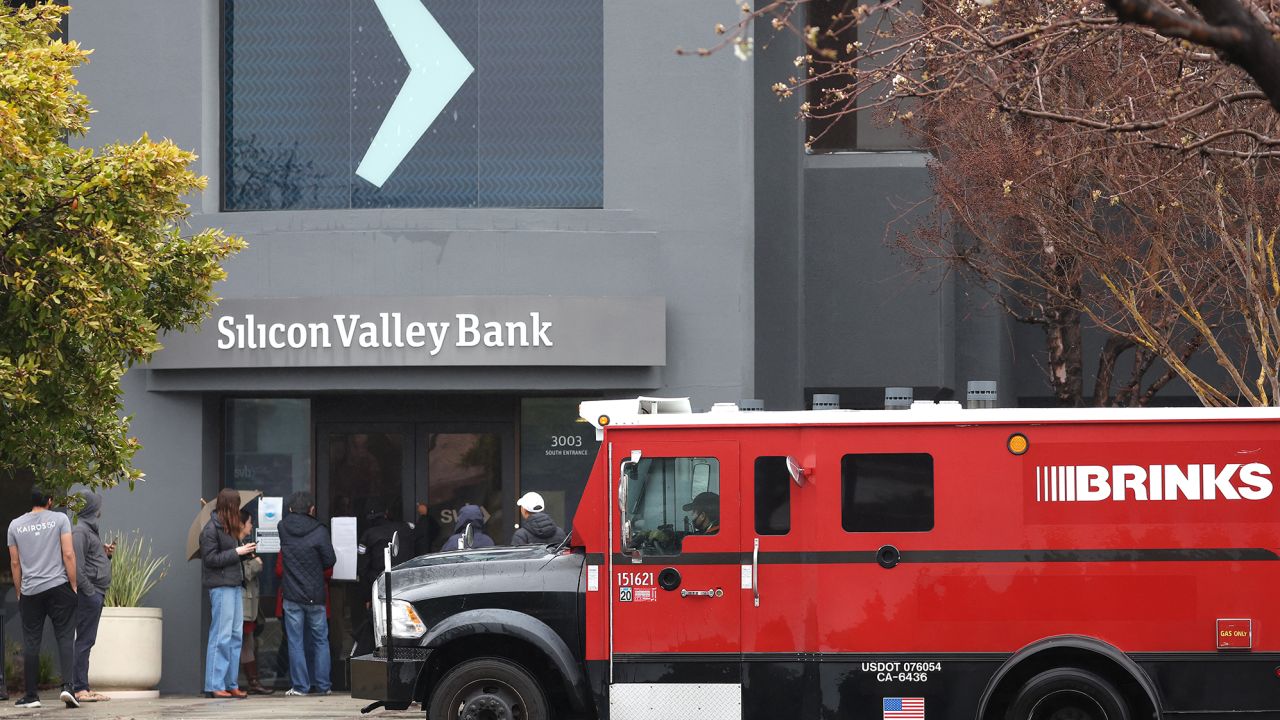
Established in 1983, Silicon Valley Bank was, just before collapsing, America’s 16th largest commercial bank. It provided banking services to nearly half of all US venture-backed technology and life science companies.
It also has operations in Canada, China, Denmark, Germany, Ireland, Israel, Sweden and the United Kingdom.
SVB benefited hugely from the tech sector’s explosive growth in recent years, fueled by ultra-low borrowing costs and a pandemic-induced boom in demand for digital services.
The bank’s assets, which include loans, more than tripled from $71 billion at the end of 2019 to a peak of $220 billion at the end of March 2022, according to financial statements. Deposits ballooned from $62 billion to $198 billion over that period, as thousands of tech startups parked their cash at the lender. Its global headcount more than doubled.
Why did it collapse?
SVB’s collapse came suddenly, following a frenetic 48 hours during which customers yanked deposits from the lender in a classic run on the bank.
But the root of its demise goes back several years. Like many other banks, SVB ploughed billions into US government bonds during the era of near-zero interest rates.
What seemed like a safe bet quickly came unstuck, as the Federal Reserve hiked interest rates aggressively to tame inflation.
When interest rates rise, bond prices fall, so the jump in rates eroded the value of SVB’s bond portfolio. The portfolio was yielding an average 1.79% return last week, far below the 10-year Treasury yield of around 3.9%, Reuters reported.
At the same time, the Fed’s hiking spree sent borrowing costs higher, meaning tech startups had to channel more cash towards repaying debt. At the same time, they were struggling to raise new venture capital funding.
That forced companies to draw down on deposits held by SVB to fund their operations and growth.
What sparked the bank run?
While SVB’s problems can be traced back to its earlier investment decisions, the run on the bank was triggered Wednesday when the lender announced that it had sold a bunch of securities at a loss and would sell $2.25 billion in new shares to plug the hole in its finances.
That set off panic among customers, who withdrew their money in large numbers.
The bank’s stock plummeted 60% Thursday and dragged other bank shares down with it as investors began to fear a repeat of the global financial crisis a decade and a half ago.
By Friday morning, trading in SVB shares was halted and it had abandoned efforts to raise capital or find a buyer. California regulators intervened, shutting the bank down and placing it in receivership under the Federal Deposit Insurance Corporation, which typically means liquidating the bank’s assets to pay back depositors and creditors.
What about depositors and investors?
US regulators said Sunday that they would guarantee all SVB customers’ deposits. The move is aimed at preventing more bank runs and helping tech companies to continue paying staff and funding their operations.
The intervention does not amount to a 2008-style bailout, however, which means investors in the company’s stock and bonds will not be protected.
“Let me be clear that during the financial crisis, there were investors and owners of systemic large banks that were bailed out … and the reforms that have been put in place mean that we’re not going to do that again,” Treasury Secretary Janet Yellen told CBS in an interview Sunday.
“But we are concerned about depositors and are focused on trying to meet their needs.”
Will this trigger a banking crisis?
There are already some signs of stress at other banks. Trading in First Republic Bank (FRC) and PacWest Bancorp (PACW) was temporarily halted Monday after the shares plunged 65% and 52% respectively. Charles Schwab (SCHW) stock was down 7% at 11.30 a.m. ET Monday.
In Europe, the benchmark Stoxx Europe 600 Banks index, which tracks 42 big EU and UK banks, fell 5.6% in morning trade — notching its biggest fall since last March. Shares in embattled Swiss banking giant Credit Suisse were down 9%.
SVB isn’t the only financial institution whose investments into government bonds and other assets have fallen dramatically in value.
At the end of 2022, US banks were sitting on $620 billion in unrealized losses — assets that have decreased in price but haven’t been sold yet, according to the FDIC.
In a sign that regulators have concerns about wider financial chaos, the Fed said Sunday that it would make additional funding available for eligible financial institutions to prevent the next SVB from collapsing.
Most analysts point out that US and European banks have much stronger financial buffers now than during the global financial crisis. They also highlight that SVB had very heavy exposure to the tech sector, which has been particularly hard hit by rising interest rates.
“While SVB is a major failure, [it] and other niche players like Signature are quite unique in the broader banking world,” research analysts David Covey, Adrian Cighi and Jaimin Shah at M&G Investments commented in a blog post on Monday. “So unique, in our view, that it is unlikely to create material problems for any of the large diversified banks in the US or Europe from a credit point of view.”
Why did HSBC buy the UK business for £1?
HSBC stepped in Monday to buy SVB UK for £1 ($1.2), securing the deposits of thousands of British tech companies that hold money at the lender.
Had a buyer not been found, SVB UK would have been placed into insolvency by the Bank of England, leaving customers with only deposits worth up to £85,000 ($100,000) — or £170,000 ($200,000) for joint accounts — guaranteed
The HSBC rescue is “fantastic news” for the UK startup ecosystem, said Piotr Pisarz, the CEO of Uncapped, a financial tech startup that lends to other startups. “I think we can all relax a bit today,” he told CNN.
In a statement, HSBC CEO Noel Quinn said the acquisition “strengthens our commercial banking franchise and enhances our ability to serve innovative and fast-growing firms, including in the technology and life science sectors, in the UK and internationally.”
Source: cnn
 The Texas Department of Public Safety has urged residents to avoid spring break travel to Mexico, warning that drug cartel violence and other crime pose a significant safety threat.
“We have a duty to inform the public about safety, travel risks, and threats,” said DPS Director Steven McCraw in a statement on Friday. “Based on the volatile nature of cartel activity and the violence we are seeing there; we are urging individuals to avoid travel to Mexico at this time.”
U.S. citizens who decide to travel to Mexico are encouraged to register with an embassy or consulate before they go, the Texas agency said.
The advisory follows the kidnapping of four Americans earlier this month in the Mexican city of Matamoros. The Americans were reportedly visiting for medical tourism when they were caught in the crossfire between rival cartel groups and abducted. Two of them were returned to the U.S., and two were found dead. A Mexican bystander was also killed.
One of the cartel groups in Matamoros apologized for the killings and handed over the men they say are responsible to the police.
Tamaulipas, the state where Matamoros is located, is considered one of the most violent places in Mexico.
The State Department’s most recent travel advisory, from October 2022, lists Tamaulipas as one of six Mexican states under a “Level 4: Do Not Travel” advisory for crime and kidnapping. There are seven more under “Level Three: Reconsider Travel.”
More than 500 Americans — and tens of thousands of Mexicans — remain missing in Mexico.
However, popular tourist destinations like Cancún, Cabo San Lucas and Mexico City have a much lower advisory of “Level 2: Exercise Increased Caution.” For comparison, the State Department has issued that advisory level for much of Western Europe, including France and the United Kingdom.
“DPS understands many people do travel to Mexico without incident, but the serious risks cannot be ignored,” the Texas DPS statement said. The department urged travelers to “carefully research any planned trips” and consider postponing or canceling upcoming trips to Mexico.
Source: kut

 The following statement was released by Secretary of the Treasury Janet L. Yellen, Federal Reserve Board Chair Jerome H. Powell, and FDIC Chairman Martin J. Gruenberg:
Today we are taking decisive actions to protect the U.S. economy by strengthening public confidence in our banking system. This step will ensure that the U.S. banking system continues to perform its vital roles of protecting deposits and providing access to credit to households and businesses in a manner that promotes strong and sustainable economic growth.
After receiving a recommendation from the boards of the FDIC and the Federal Reserve, and consulting with the President, Secretary Yellen approved actions enabling the FDIC to complete its resolution of Silicon Valley Bank, Santa Clara, California, in a manner that fully protects all depositors. Depositors will have access to all of their money starting Monday, March 13. No losses associated with the resolution of Silicon Valley Bank will be borne by the taxpayer.
We are also announcing a similar systemic risk exception for Signature Bank, New York, New York, which was closed today by its state chartering authority. All depositors of this institution will be made whole. As with the resolution of Silicon Valley Bank, no losses will be borne by the taxpayer.
Shareholders and certain unsecured debtholders will not be protected. Senior management has also been removed. Any losses to the Deposit Insurance Fund to support uninsured depositors will be recovered by a special assessment on banks, as required by law.
Finally, the Federal Reserve Board on Sunday announced it will make available additional funding to eligible depository institutions to help assure banks have the ability to meet the needs of all their depositors.
The U.S. banking system remains resilient and on a solid foundation, in large part due to reforms that were made after the financial crisis that ensured better safeguards for the banking industry. Those reforms combined with today’s actions demonstrate our commitment to take the necessary steps to ensure that depositors’ savings remain safe.
Source: federalreserve
Houston’s premier Hispanic news network, dedicated to keeping you informed with the latest updates on local and national breaking news, community events, entertainment, chisme, and much more. We strive to be your trusted source for engaging and timely content that connects with our vibrant community and celebrates the culture and stories that matter most to you.
Contact us: contact@queondamagazine.com
© Copyright - Que Onda Magazine 2024
 What’s happening


