Queen Elizabeth II and the Duke of Edinburgh have received their Covid-19 vaccinations, a Buckingham Palace spokesperson said Saturday.

Queen Elizabeth II and the Duke of Edinburgh have received their Covid-19 vaccinations, a Buckingham Palace spokesperson said Saturday.

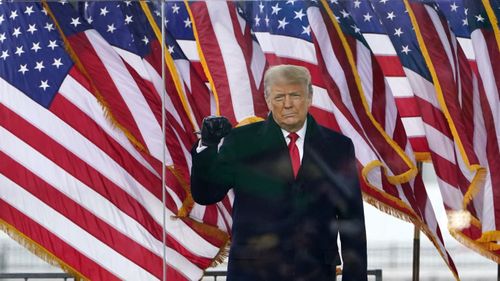
They were never a natural fit, the straight-laced evangelical and the brash reality TV star. But for more than four years, President Donald Trump and Vice President Mike Pence made their marriage of political convenience work.
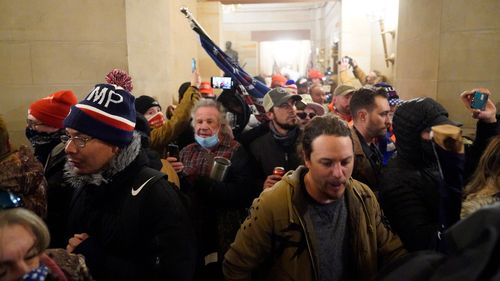
Now, in the last days of their administration, each is feeling betrayed by the other. It’s part of the fallout from an extraordinary 24-hour stretch in which Pence openly defied Trump, Trump unleashed his fury on the vice president, and a mob of violent supporters incensed by Trump’s rhetoric stormed the Capitol building and tried to halt the peaceful transfer of power.
The Trump-Pence relationship is “pretty raw right now,” said one top GOP congressional aide, who described multiple phone calls in which Trump berated Pence and tried to pressure the vice president to use powers he does not possess to try to overturn the results of the 2020 election. Pence, for his part, was left feeling “hurt” and “upset” by the episode, according to people close to him. They spoke on condition of anonymity to discuss internal matters.
Pence’s decision to publicly defy Trump was a first for the notoriously deferential vice president, who has been unflinchingly loyal to Trump since joining the GOP ticket in 2016. Pence has spent his tenure defending the president’s actions, trying to soothe anxious world leaders put off by Trump’s caustic rhetoric, and carefully avoiding the president’s ire.
He has taken on some of the administration’s most high-pressure projects, including leading its response to the coronavirus. And he has stood by Trump even as the president leveled baseless allegations of voter fraud and refused to concede the election after his loss to Democrat Joe Biden.
Under normal circumstances, the vote-tallying procedure that began on Wednesday would have been a mere formality. But after losing court case after court case, and with no further options at hand, Trump and his allies zeroed in on the congressional tally as their last chance to try to challenge the race’s outcome.
In a bizarre interpretation of the law, they argued that the vice president had the unilateral power to reject Electoral College votes supporting Biden. The Constitution makes clear that only Congress has that power.
The effort effectively turned Pence into a scapegoat who could be blamed for Trump’s loss if the vice president refused to go along with the plan. Trump and his lawyers spent days engaged in an aggressive pressure campaign to force Pence to bend to their will in a series of phone calls and in-person meetings, including one that stretched for hours on Tuesday.
When Pence, who consulted with his own legal team, constitutional scholars, and the Senate parliamentarian, informed Trump on Wednesday morning that he would not be going along with the effort, the president “blew a gasket,” in the words of one person briefed on the conversation.
“If Mike Pence does the right thing we win the election,” Trump wrongly insisted. He repeatedly returned to Pence throughout his speech as he tried to pressure the vice president to fall in line.
But Trump already knew what Pence intended. And as Trump spoke, Pence released a letter to Congress laying out his conclusion that a vice president cannot claim “unilateral authority” to reject states’ electoral votes. He soon gaveled into order the joint session of Congress where his and Trump’s defeat would be cemented.
Not long after that, members of Trump’s rally crowd arrived at the Capitol, where they overwhelmed police, smashed windows, occupied the building and halted the electoral proceedings. Pence was whisked from the Senate chamber to a secure location, where he was held for hours with staff as well as his wife and daughter, who had been there to support him.
Trump did not call to check in on his vice president’s safety during the ordeal and instead spent much of Wednesday consumed with anger over Pence’s action, tweeting, “Mike Pence didn’t have the courage to do what should have been done to protect our Country and our Constitution.”
Later, members of the mob outside the Capitol were captured on video chanting, “Hang Mike Pence!”
For allies of Pence, it was a deeply upsetting episode that put the vice president in danger after four years of unstinting loyalty to the president and left Pence himself feeling hurt.
“I just think he’s had enough,” said John Thompson, who served as Pence’s campaign spokesman and also worked for the Republican Governors’ Association.
“Yesterday just really pulled on his heartstrings,” Thompson said. “He’s been this loyal individual and the president was asking him to break the law and act outside his constitutional duties. I think it just reached a boiling point and the vice president said, ‘I’ve had enough.’”
Republican Sen. Jim Inhofe of Oklahoma told Tulsa World, “I’ve never seen Pence as angry as he was today.”
“He said, ‘After all the things I’ve done for (Trump),’” Inhofe added.
Former House Speaker Newt Gingrich, an informal Trump adviser, also came to Pence’s defense, tweeting that his action was “a profile in courage.”
It remains unclear how the dynamic between Trump and Pence will play out over the next two weeks and how long the president will hold his grudge. The White House declined to discuss Trump’s thinking, but allies said Pence intends to spend the next two weeks focused on the transition.
He is also expected to attend Biden’s inauguration.
And while Pence had been banking on his close relationship with the president to propel him to top-tier status if he decides to run for president in 2024, allies said they didn’t think the vice president’s actions this week would have long-term consequences, even if some voters blame him for Trump’s defeat.
“I thought that was a very courageous moment for him,” Thompson said. “And I think that’s going to help his future.”

President Donald Trump is increasingly isolated in the wake of the deadly mob attack by his supporters on the U.S. Congress last week.
Banned from Twitter for inciting violence, Trump is unable to communicate with his supporters as calls for his removal grow not just among Democrats, but among leading members of his own party in the United States’ Senate.
The Democrat-controlled House of Representatives is expected to move forward with an unprecedented second impeachment on Monday and charge Trump with “incitement to insurrection” for his role in the mob attack that left five people dead including a police officer.
Trump also appears increasingly isolated within his own administration.
Trump did not check on Pence during the siege and they have not spoken since; two Cabinet secretaries have resigned, and Treasury Secretary Steven Mnuchin has cut short his overseas trip to facilitate the transition to the Biden administration.
It took about 90 days for the United States to reach its first 2 million cases of coronavirus last year.
Unfortunately, Wednesday was not at all peaceful. It looked a lot like too many Third World nations fraught with violence. It embarrassed our country. We used to take pride in being the shining example to the world for the way it can and should be done — peacefully. Yet all is not lost in my humble opinion.
Let me just say that I have been a proud Trump supporter. Proud of all that President Trump was able to accomplish in his four years in office. He took us away from the socialist trend that our nation has been on for a number of years.
I am not happy with the way he appears to have thrown VP Mike Pence, one of his most loyal supporters, “under the bus” for doing his constitutional duty.
Do I believe there was voter fraud? Yes, I do, but can I prove it? No, I cannot. I am informed by the media and books that I read.
We must be most vigilant during the next administration and especially so with both branches of Congress and the presidency of the same party. Our congressional leadership must work to contain the radical agenda of the left.
We as citizens must hold our congressional representatives’ feet to the fire, and we must work to support and elect down-ballot officeholders who will fight for our liberty.
I am optimistic that our nation will continue to survive and to thrive, not because of our new administration or the dominance of the Democrat Party in Congress. Our nation will carry on because of the Constitution that our Founding Fathers created if we remain vigilant.
We will remain strong because of the resilience and the ingenuity of the American people. A very wise man (my father) often told me when discouragement presented itself: “The sun will come up tomorrow.”
|
|
|
|
|
|
|

|
Health officials in Austin are considering opening a makeshift hospital as its intensive care units fill up. Patients in North Texas are being treated in lobbies or in hallways. And hospitals around Laredo, Abilene, and College Station have three or fewer intensive care unit beds open, according to state data.
A week into the new year, hospitalizations in Texas have well-surpassed a deadly summer wave that overwhelmed health care workers in the Rio Grande Valley. Health experts have long warned of a dark winter — with a public tired of following safety precautions, a raging pandemic, and cold weather drawing people indoors where the virus can more easily spread. Add to that holiday gathering and increased levels of travel, which health officials say are already being reflected in the growing numbers of hospitalized coronavirus patients.
The dire figures come as two vaccines, produced in record time, have rolled out to health care workers in a massive undertaking so far beset by confusion and mishaps. The state has reported at least 28,545 fatalities tied to the virus, available intensive care unit beds are at a low and health experts say Texans can’t vaccinate their way out of the current surge. On Thursday, the first known case of a new and more contagious coronavirus strain was reported in Texas.

“Right now, probably half the patients I see never make it out of the waiting room… just because there’s physically no space, and when we do have space it’s limited — nurse staffing also is an issue,” said Dr. Robert Hancock, who works at hospitals in North Texas, Amarillo, and Oklahoma. “We’re doing the best we can, but it’s to a point where we’re not providing the care we’d like to.”
In Central Texas, Austin-area health officials forecast the region might run out of intensive care unit beds in the coming days and could start to set up a pop-up hospital as soon as this week. They erected a health facility in the Austin Convention Center as infections soared this summer, and a solicitation obtained by The Texas Tribune in June showed health officials were recruiting volunteers to “provide hands-on care to COVID + patients.” It never took in patients.
Now, “the state is in the surge. The state is in crisis,” said Dr. Mark Escott, interim health authority for Austin and Travis County. “It seems very clear to us that we are going to run out of hospital beds, and that we are going to have to stretch resources in order to meet the needs of our community,” he added.
Some hospitals in North Texas are holding patients in emergency rooms that are not designed for long-term care because there’s no space in the intensive care units, said Hancock, who is president of the Texas College of Emergency Physicians. It’s nearly impossible to transfer a patient that needs more advanced or specialized care elsewhere — for those patients: “you’re out of luck. There’s nobody that’s going to accept you,” he said.
The hospitals are so crowded he is sometimes treating patients in the lobby and then discharging them because there are no available beds.
Around Fort Worth, some hospitals are running out of both intensive care unit beds and regular beds, said Dr. Justin Fairless, an emergency room doctor and an assistant professor of emergency medicine at a medical school in Fort Worth established by Texas Christian University and the University of North Texas Health Science Center.
At the two hospitals where he works, there are coronavirus patients in the hallway “because there’s nowhere else to put them,” and nursing staff who typically do administrative work are helping see patients, he said. Some health care workers who have the virus have returned to work because there’s not enough staff, he said. They are approved to do so under the Centers for Disease Control and Prevention guidance that permits it after symptoms have improved and a certain number of days have elapsed.
During Fairless’ shift Tuesday, patients were being treated in pockets of the hospital not normally used for patient care, like a pre-operation area used by health care workers performing an endoscopy. He sent several patients home that ordinarily would have been admitted to the hospital because of the possible risk that they’d be exposed to the coronavirus.
“We’re admitting patients into areas that don’t typically hold patients and on top of that,” he said, adding that some are being held in the emergency room for up to 48 hours because they “have nowhere else to go.”
The president of the Dallas-Fort Worth Hospital Council said hospitals in the area “have capacity issues, staffing issues and are anticipating another COVID-19 surge in late January.” Elsewhere, in Lubbock, hospitals are full, but the numbers have lessened since the area saw a crush of patients this fall.
Statewide, more than a dozen regions called Trauma Service Areas have surpassed a “high hospitalizations” marker that Gov. Greg Abbott set out, and that requires businesses there to scale back capacity to let fewer patrons in. Under Abbott’s order, the business limitations kick in in regions where hospitals are more than 15% full with coronavirus patients for seven-days. The number of people allowed into businesses is reduced from 75% occupancy to 50%, and open bars must close — though many have begun to sell more food to qualify as restaurants.
A Tribune analysis found those remedies set out by Abbott have done little to quash the virus in areas already seeing hospitals fill up.
In Harris County, which had to ratchet back business capacity under Abbott’s order earlier this week, Judge Lina Hidalgo said she was concerned the “threshold has not yielded the necessary change in other areas.”
“Reaching the threshold — activating the rollbacks — doesn’t in and of itself change the trajectory. That’s something that’s in all of our hands,” Hidalgo said.
In the Austin and Travis County area, where there’s been a 160% increase in new hospital admissions since December, Escott said he doesn’t think that “rollback to 50% occupancy at retail and restaurants is doing the trick.”
“I think it was forward-thinking to set those benchmarks, but I think we have to assess the situation and identify whether or not the strategy is working or not — it’s clearly not working,” he said.
Local officials there, he added, have “reached the limits of what we can do under state law, and under the executive orders.”
Abbott’s mandates have barred local officials from taking more aggressive actions, and over the holidays he took aim at an Austin-area curfew that tried to ban late-night dine-in and beverage service for a few days to lessen the virus’ spread.
A spokesperson for Abbott said local officials have “abdicated their authority and refused to enforce existing protocols” by leaving violations unpunished, “further endangering the health and well-being of Texans.”
“Increased restrictions will do nothing to mitigate COVID-19 and protect communities without enforcement,” said spokesperson Renae Eze. “And even states with increased restrictions and lockdowns throughout the pandemic have done little to mitigate the virus, such as California and Rhode Island, which have the highest COVID-19 infection rates per capita in the world, and New York, which is leading the nation in COVID-19 deaths.”
In the meantime, hospitals in parts of the state are full of patients, and vaccine doses are being gradually doled out to health care workers and other vulnerable groups.
Fairless, the emergency room doctor, said the hospital was becoming a more and more “unsafe environment” and was excited to get a second dose of a Pfizer vaccine Wednesday. Driving to the hospital, he said: “I can guarantee I’m going to see the parking lot totally full of people.”
“I’ve gone through H1N1 and all the other flu pandemics,” he added. “I’ve never really seen it this busy — especially at these smaller hospitals.”