



81.9 F
Houston
Saturday, August 22, 2026

Home Blog Page 629

A spat between the US and Russia over a downed drone is escalating. Here’s what you need to know

0

The US has released footage of the moment a Russian plane dumped fuel on a US drone over the Black Sea on Tuesday – a confrontation that has sparked a diplomatic spat and led to a race to recover some highly classified technology.

The White House slammed Moscow’s actions as “unsafe, unprofessional and reckless” while Russia’s defense ministry denied its aircraft came into contact with the drone.

But dramatic footage that was declassified on Thursday seemingly shows the Russian jet emitting a plume of fuel over the drone, causing its camera systems to cut off.

Russian and US aircraft have operated over the Black Sea during Moscow’s war in Ukraine, but this is the first incident of its kind since the conflict began – and it threatens to heighten tensions between the two countries further.

Here’s what you need to know.

What happened to the US drone?

The drone – a US-made MQ-9 Reaper – and two Russian Su-27 aircraft were flying over international waters over the Black Sea on Tuesday when one of the Russian jets intentionally flew in front of and dumped fuel on the unmanned aerial vehicle several times, a statement from US European Command said.

The aircraft then hit the propeller of the drone, prompting the drone’s remote operators to bring the MQ-9 drone down in international waters. Pentagon spokesman Brig. Gen. Patrick Ryder added Tuesday that the Russian aircraft flew “in the vicinity” of the drone for 30 to 40 minutes before colliding just after 7 a.m. Central European Time.

The Russians had given a different version of events. A Russian fighter aircraft “did not use airborne weapons or come into contact” with a US Air Force MQ-9 Reaper drone over the Black Sea, the Russian defense ministry said in a statement Tuesday.

Thursday’s video provides a view from the drone’s cameras of the interaction, showing the Russian jet veering closely over the unmanned aerial vehicles (UAV).

“It clearly demonstrated our narrative of what happened and I think if any of you have seen that video you can see clearly that it does,” said John Kirby, the strategic communications coordinator at the National Security Council.

He said the decision to release the footage was in part to “lay bare and to make clear to the rest of the world the manner in which the Russians have been just flat out lying, flat out lied, about their account” of the episode.

Who will recover the downed drone?

The incident marks the first known time Russian and US military aircraft have come into direct physical contact since Russia launched its invasion of Ukraine just over a year ago and is likely to increase tensions between the two nations.

More pressingly, a race is underway to avoid the drone falling into the wrong hands.

The Russian Security Council Secretary said Wednesday that Russia may try to get the wreckage of the drone to study it.

“I don’t know if we will be able to get it or not, but we need to do it… And we will definitely look into it,” said Nikolai Patrushev on on Russian state TV Rossiya 1.

The Kremlin has said a decision on whether to retrieve the drone from the Black Sea will come from Russia’s Ministry of Defense. “This is the prerogative of the military. If they believe that it is necessary for our interests and our security in the Black Sea, they will do it,” Kremlin spokesperson Dmitry Peskov told reporters on a conference call. Peskov said he did not know what the ministry has decided.

On Thursday, Ukraine’s Operational Command said Russia is increasing its presence in the Black Sea with a “rather atypical number of ships,” in a post on its official Facebook page.

“The rather atypical number of ships in the amount of 21 units may also be related to a demonstration of dominance at sea,” following Tuesday’s drone incident, Operational Command “South” said.

“It is also possible that the Russians themselves will conduct a search operation,” it said.

What is the MQ-9 Reaper drone?

The US Air Force primarily uses the Reaper for collecting intel, according to the service’s website, which touts the “intelligence, surveillance and reconnaissance” abilities of the drone.

But when armed, the drone can also be used against “high-value, fleeting, and time-sensitive” executive targets, given its weapons systems and its ability to surveil an area for a long period of time.

In other words, the Reaper is both capable of surveilling and striking an enemy. These dual uses have earned the Reaper a nickname in military circles: the “hunter-killer.”

The US Air Force has relied heavily on drones for a number of missions; it had logged more than 2 million cumulative flight hours by 2019, according to the Department of Defense’s most recent unclassified Selected Acquisition Report (SAR), and was flown for around 330,000 hours each year.

They are expensive; a unit of four aircraft costs $56.5 million, according to the Air Force.

The surveillance and strike platforms saw heavy service in the US-led wars in Iraq and Afghanistan. But the Air Force has been looking to wind down the production and use of the drones in recent years. Annual funding for the program has declined since it reached more than $800 million annually on two occasions during the Obama administration, SARs show.

Following Russia’s invasion of Ukraine last year, Politico reported that the Air Force was looking to send some of its older drones to Kyiv, and was seeking to persuade the Pentagon to approve the move.

Why was the US flying a drone in this region?

American reconnaissance missions have been a regular occurrence in international airspace over the Black Sea for several years, and the area has been heavily militarized since Russia annexed Crimea in 2014, so it is not uncommon for a US drone to be spotted over these waters.

Russia appeared to claim on Tuesday that the area falls under the remit of its invasion of Ukraine, which it euphemistically calls a special military operation; Russian Ambassador to the US Anatoly Antonov said in response to a question from CNN that Russia “had informed about this space that was identified as a zone for special military operation.”
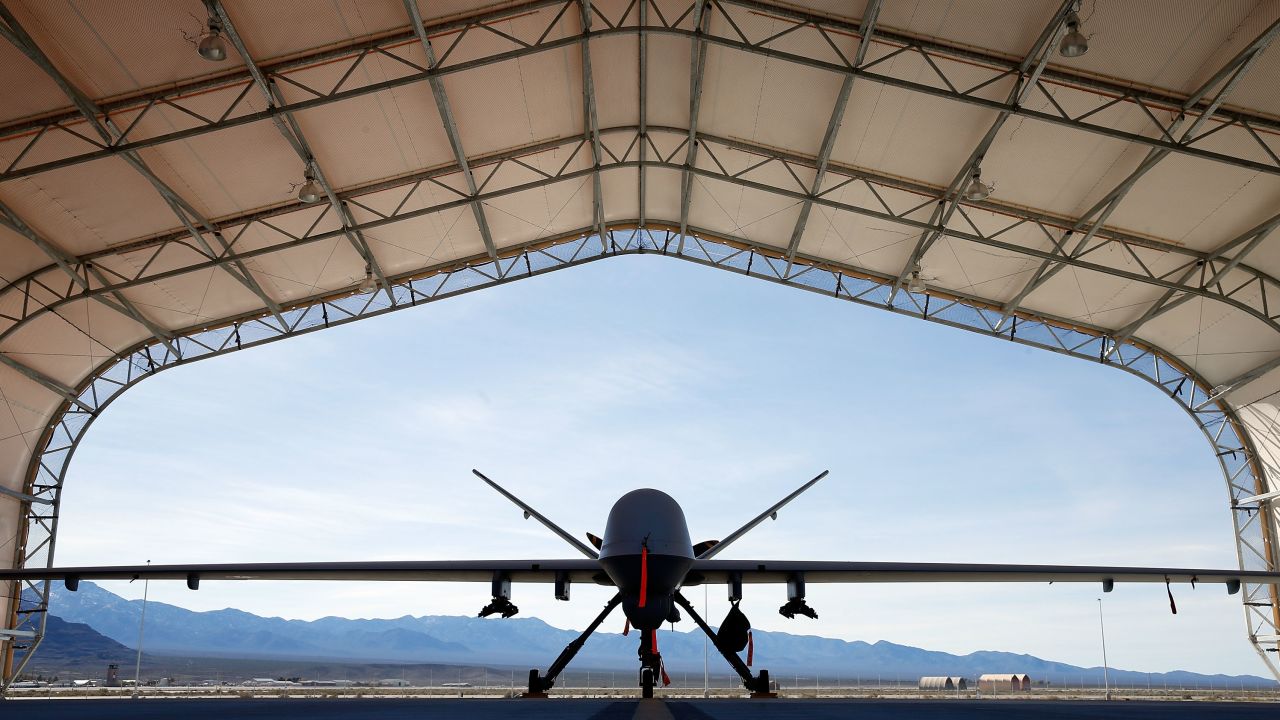
Several European countries also use the drone.

“We have warned not to enter, not to penetrate,” he said, asking how the US would react if a Russian drone came close to New York or San Francisco – a continuation of Russia’s claim that it is entitled to Ukrainian land.

But that argument carries little weight outside of Moscow, given Russia’s annexation of Ukrainian territory in Crimea in 2014 and then its unprovoked full-scale invasion of the entire country last year.

The US has said that the drone was in fact flying over international waters when it was downed; interactions between Russian and US operations in that region happen frequently, and it’s unclear whether Moscow intended to down the drone or whether it was simply trying to “buzz” the aircraft – a close fly-by that is done to encourage the drone or plane to move on.

Has this happened before?

The US has repeatedly reprimanded Russia for buzzing its aircraft in the Black Sea in recent years.

Around 90% of US reconnaissance flights over the Black Sea, often flown out of nearby naval stations in Europe, are intercepted by Russian jets, according to the US military in 2020.

“The greatest risk is miscalculation. The Russians do intercept these aircraft frequently,” Capt. Tim Thompson, commodore of the US Navy’s Task Force 67, told CNN that year. “They tend to be very professional and safe, but, on occasion, they can be unprofessional.”

And this is not the first Reaper to be downed while on a mission. In 2019 the US blamed Iran for the shooting down of a MQ-9 Reaper over Yemen by a surface-to-air missile.

Dara Massicot, a senior policy researcher at the RAND Corporation who specializes on defense issues relating to Russia, wrote on Twitter that Tuesday’s incident “fits with a larger pattern” by Russia of “escalating signals before coming too close to a platform,” though she noted that dumping fuel on the drone appeared to be a new tactic.

Massicot described the incident as “a close pass that went bad,” and suggested that it followed a Russian approach of “(escalating) behavior to compel their target to change course.”

What happens next?

Despite the history of encounters in the Black Sea, Russia’s ongoing invasion of Ukraine heightens has heightened tensions in the region. The US European Command said in its press release on Tuesday that the incident “could lead to miscalculation and unintended escalation.”

US National Security Council communications coordinator John Kirby called the incident unique in how “unsafe, unprofessional and reckless” the Russian actions were; Antonov said that Russia did not want “confrontation” with the US.

After Tuesday’s harsh language and the summoning of the Russian ambassador in DC, the US took the rare step of hastily declassifying and releasing footage from the drone – directly calling out Russia’s version of events.

That step could escalate the war of words over the incident.

But there is a pressing question that remains unanswered: what will become of the downed Reaper and its highly classified payload? According to the NSC’s Kirby, the US is not confident it will be able to successfully find wreckage in the Black Sea.

“I’m not sure we are going to be able to recover it,” he told CNN This Morning.

Russia has signaled its intention to find the wreckage first. And Moscow’s Navy has several ships in the Black Sea, including ships based in Crimean ports, which would have placed them in an advantageous position to attempt to recover the US MQ-9 Reaper drone after its encounter with Russian fighter jets on Tuesday.

The drone came down in international waters in the Black Sea approximately 70 miles southwest of Crimea, one of the officials said. It is unclear if Russia was able to recover any of the wreckage from the drone when they arrived at the crash site.

Army investigating death of another Ft. Hood soldier who complained of sexual harassment

0

Fort Hood officials are investigating the death of Private Second Class Ana Basalduaruiz, whose family said she complained to them about sexual harassment by one of her fellow soldiers.

The 21-year-old served for 15 months as a combat engineer at Fort Hood, the same Texas base where Army Specialist Vanessa Guillen was killed in 2020. Guillen’s death launched a sweeping probe into sexual misconduct at Fort Hood.

“The army criminal investigation division and the chain of command are actively investigating the facts and circumstances surrounding [Basalduaruiz’s] death,” the base told ABC News in a statement.

Just like Basalduaruiz, Guillen too complained of sexual harassment by another soldier. Guillen was later murdered by another soldier who killed himself when being pursued by police.

Guillen’s mother, Gloria, described these complaints in a 2021 interview with ABC News.

“[She said,] ‘I’m being sexually harassed by a sergeant.’ I said, ‘Honey, that can’t be, honey. To that extent?’ She said, ‘Yes mami,’ and tears ran down like this,” she told ABC News in Spanish.

A scathing report released more than a year after her death confirmed that Guillen had been sexually harassed by a superior. The nearly 300-page document reported that leaders in her unit did not take appropriate action after she reported the sexual harassment to her supervisor on two separate occasions.

Guillen’s sister, Mayra, spoke to ABC News’ Stephanie Ramos after the report’s release.

“It’s sad how after over a year, they finally accepted that we were saying the truth and nothing but the truth from the very beginning,” Mayra said.

Mayra also reacted to Basalduaruiz’s death on Twitter Wednesday night, saying in part, “This is also very triggering for me … I will be speaking to the family soon.”

Source: abc13

Mar 16 – Mar 22, 2023 | Weather

0

¡Que Onda Magazine!

El Líder del Clima.

Mantente informado.

Click on the map to view details or click here: QOHW0316 (1)


¡Que Onda! Magazine Houston – edición 1259

Gracias por SEGUIRNOS, este artículo contiene la edición 1259 de la revista digital de HOUSTON de ¡Que Onda! Magazine.

Del 16 de marzo al 22 de marzo del 2023


Trade Delegation of agricultural and cattle exporters from Costa Rica attend the Houston Rodeo

0

 Costa Rica is a true gem among tourist destinations, offering a unique blend of natural beauty, cultural richness, and sustainable tourism practices. This small Central American country boasts an incredible array of ecosystems, from lush rainforests to pristine beaches, and stunning volcanoes to expansive grasslands. The country’s commitment to conservation and eco-tourism has resulted in a truly unforgettable travel experience that is both educational and awe-inspiring.

Visitors to Costa Rica can experience some of the most diverse and

abundant wildlife on the planet, including jaguars, sloths, and howler monkeys. Adventurers can enjoy activities like hiking, zip-lining, surfing, and birdwatching, while history and culture enthusiasts can explore the country’s rich traditions and landmarks. From the iconic Arenal Volcano to the Monteverde Cloud Forest Reserve, there is truly something for everyone.

Beyond its natural beauty and cultural significance, Costa Rica is also known for its exceptional hospitality and service. The tourism industry is a vital part of the country’s economy, and visitors can expect a warm and welcoming attitude from locals. Sustainable tourism practices are also a priority in Costa Rica, with eco-lodges, resorts, and boutique hotels offering eco-friendly accommodations and tours.

It may come as a surprise to some, but Costa Rica is a notable exporter of beef to the United States. Currently, a delegation of agricultural and cattle exporters led by Costa Rican Congressman Daniel Gerardo Vargas Quiroz is effectively representing Costa Rica at the 2023 Houston Livestock and Rodeo.

Overall, Costa Rica is a great tourist destination for those seeking a truly unique and unforgettable experience that combines natural beauty, cultural richness, and sustainability.

Telemundo Houston

0

Horario estelar

Bosnian Immigrant Sentenced to Life in Prison Without Parole for Killing Wife and Her Lover in Southwest Houston

0
Omar

A Bosnian immigrant was sentenced to life in prison without parole late Tuesday after being convicted of capital murder for killing his wife and her lover in 2018, Harris County District Attorney Kim Ogg announced.

“This man killed two people, including the mother of his children, and tried to flee the country to escape responsibility,” Ogg said. “We know that domestic violence can escalate to murder, and that is why it is so important to seek justice for the victims in cases like this.”

Jordy Husein Suljanovic, 46, fatally shot Adriana Perez, his wife and the mother of his four children, and her boyfriend, Omar Santamaria-Ruiz, in the closet of the master bedroom of their home in southwest Houston on Oct. 2, 2018.

Adriana Perez

Suljanovic, a Bosnian refugee who became a long-haul truck driver, had installed a secret camera at his home and was monitoring it while driving. When he saw his 41-year-old wife and her 33-year-old lover at the house, he returned home and killed both of them, waking their children in the middle of the night with the gunshots.

After the slaying, Suljanovic and his adult son took both bodies to Louisiana and dumped them. Santamaria-Ruiz’s body was dumped in the woods outside of Natchitoches, La.

Jordy Jr.

Suljanovic’s son, who also is named Jordy Suljanovic, dumped his mother’s body near the Atchafalaya River outside of Baton Rouge. The 21-year-old pleaded guilty last year to tampering with evidence, namely a corpse, in exchange for a five-year prison sentence.

In the weeks following the slayings, the older Suljanovic sold his Houston home and fled to Mexico City with his two young daughters, his son, and his son’s 16-year-old girlfriend. When he learned that he would be charged with the double murder, he tried to fly with all of them back to his homeland of Bosnia.

Jordy

Suljanovic was detained when the plane landed in London after the first leg of the trip. He was returned to Houston where he was arrested by the Houston Police Department and the FBI.

Late Tuesday, he was convicted of capital murder late after an 8-day-trial. He was sentenced automatically to life in prison without parole. His wife’s brother and Santamaria-Ruiz’s sister gave victim impact statements about losing their loved ones.

Assistant District Attorney Lauren Bard, who prosecuted the case with ADA Kim Nwabeke, said Suljanovic had a history of abusive behavior toward his wife.

“She had been verbally and physically abused by him. And since she was born and raised in Mexico, she didn’t have citizenship of her own and probably didn’t feel like she could leave, she couldn’t go anywhere,” Bard said. “I’m sure she felt trapped, and she also had two younger daughters and probably stayed in part because of the kids.”


Special prosecutor in Alec Baldwin Rust shooting case steps aside after separation of powers complaint

0

A special prosecutor who doubles as a state MP is stepping down from her role in the manslaughter case against actor Alec Baldwin in the death of a cinematographer on a New Mexico film set.

Baldwin’s legal team in February sought to disqualify special prosecutor and Republican state representative Andrea Reeb based on constitutional provisions that safeguard the separation of powers between distinct branches of government.

Ms Reeb said in a statement on Tuesday that she “will not allow questions about my serving as a legislator and prosecutor to cloud the real issue at hand”.

“It has become clear that the best way I can ensure justice is served in this case is to step down so that the prosecution can focus on the evidence and the facts,” Ms Reeb said.

District attorney Mary Carmack-Altwies filed a notification in state district court and declined further comment.

Baldwin and weapons supervisor Hannah Gutierrez-Reed have pleaded not guilty to charges of involuntary manslaughter in the shooting death of cinematographer Halyna Hutchins.

A black-and-white selfie of Halyna Hutchins.
Halyna Hutchins was killed on the set of the movie Rust when a prop gun misfired.(Instagram: Halyna Hutchins)

The charges carry a maximum penalty of 18 months in prison and fines.

Ms Hutchins died shortly after being wounded on October 21, 2021, during rehearsals for the Western film Rust at a ranch on the outskirts of Santa Fe.

A preliminary hearing is scheduled in May to decide whether the evidence is sufficient to proceed to a trial.

Prosecutors say assistant director David Halls, who oversaw safety on set, has signed an agreement to plead guilty to the negligent use of a deadly weapon.

In her role as a state representative, Ms Reeb has sponsored several criminal justice initiatives, including enhanced punishments for firearms violations.

The Republican steered clear of voting on public spending to prosecute Baldwin and Ms Gutierrez-Reed.

She was excused from a House floor vote in February on a proposed state budget that includes $US360,000 ($538,000) for special prosecution expenses in the fatal film-set shooting.

Is my money safe? What you need to know about bank failures.

0

The recent failures of Silicon Valley Bank and Signature Bank, which catered mostly to the tech industry, may have you worried about your money. They were the second and third-biggest bank failures in U.S. history.

It all started last week when too many depositors tried to withdraw their money from Silicon Valley Bank at once, resulting in a bank run.

The bank had to sell treasury bonds and other securities at a steep loss to give customers their cash, and word spread fast on social media, contributing to the bank’s sudden failure. Regulators took control of New York-based Signature Bank soon after, saying it was necessary to protect depositors after too many people withdrew money.

In response, regulators guaranteed all deposits at the two banks and created a program to help shield other banks from a run on deposits.

Here’s what you need to know about your own money.

Are my deposits protected?

Yes, all deposits up to $250,000 are insured by the Federal Deposit Insurance Corp. The FDIC has a solid track record of insuring deposits above its cap, too.

Nearly all banks are FDIC insured. You can look for the FDIC logo at bank teller windows or on the entrance to your bank branch.

Credit unions are insured by the National Credit Union Administration.

Individuals or businesses with large deposit amounts are encouraged to spread the funds across different financial institutions given that the FDIC insures up to $250,000 per depositor, per bank for each account type.

Federal officials have implemented measures to make sure customers at other banks don’t fret and withdraw their deposits.

Is my bank going to fail?

If you are worried about your bank closing in the near future, there are telltale signs of a bank that’s in trouble, according to Caleb Silver, editor-in-chief of investment site Investopedia.

He recommends that bank clients:

  • Watch the bank’s stock price.
  • Keep an eye on the bank’s quarterly and annual reports.
  • Set a Google alert for the bank to monitor news coverage.

Pay close attention to the way your bank is behaving, Silver said.

“If they’re trying to raise money through a share offering or if they’re trying to sell more stock, they might have trouble on their balance sheet,” said Silver.

Should I look for alternatives?

If you have more than $250,000 in your bank, there are a few things you can do, including opening a second, joint account.

You can protect up to $500,000 by opening a joint account with a spouse, according to Greg McBride, chief financial analyst at Bankrate, a financial services company.

“A married couple can easily protect a million dollars at the same bank by each having an individual account and together having a joint account,” he said.

You can also open up an account at another financial institution to spread out your deposits so that each falls under the FDIC insurance cap.

Do not withdraw cash

Despite the recent turmoil, experts don’t recommend withdrawing cash from your account. Keeping your money at a bank rather than in your home is safer, especially when it is insured.

“It’s not a time to pull your money out of the bank,” Silver said.

Even people with uninsured deposits usually get nearly all of their money back.

“It takes time, but generally all depositors — both insured and uninsured — get their money back,” said Todd Phillips, a consultant and former attorney at the FDIC. “Uninsured depositors may have to wait sometime, and may have to take haircut where they lose 10 to 15% of their savings, but it’s never zero.”

Source: cbsnews
